-By Erwan.W
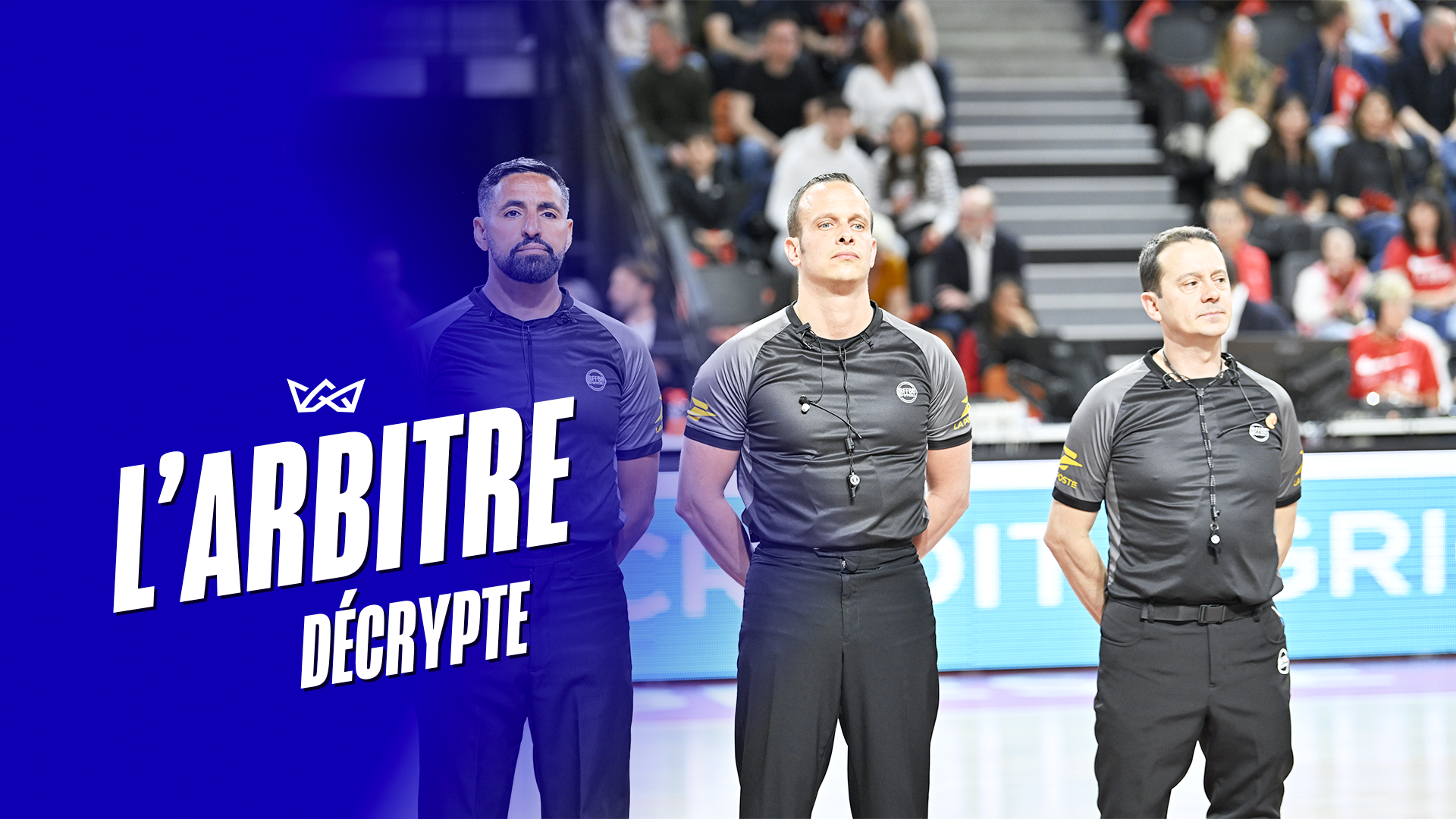
Suite de la collaboration entre la LNB et la Direction de l'Arbitrage de Haut-Niveau avec le format "L'arbitre décrypte" qui revient sur plusieurs coups de sifflets avec pédagogie et de nombreuses explications.
Description
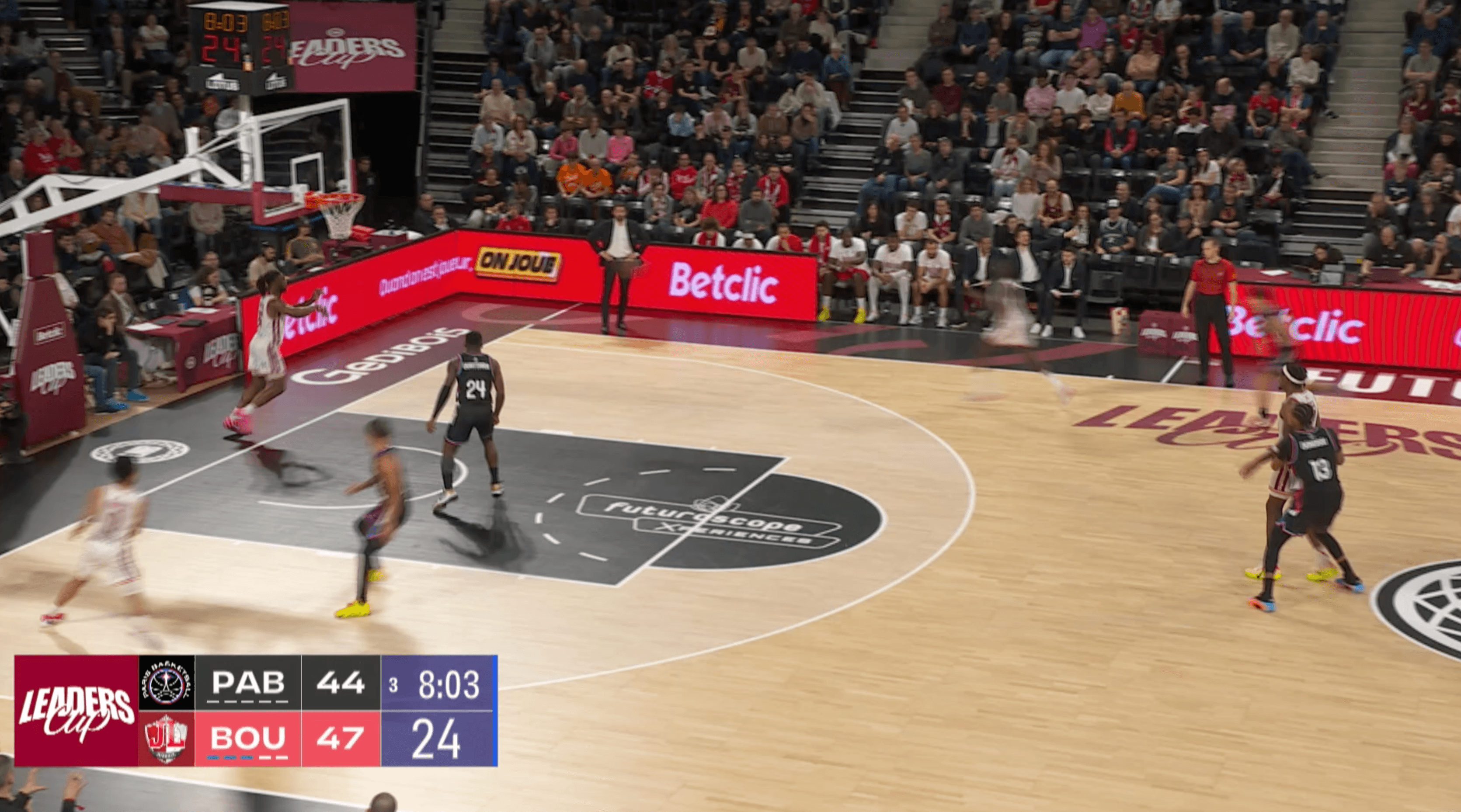
L'attaquant subit une faute du défenseur pour stopper la transition. Au moment où le contact illégal se produit, l'attaquant a le ballon qui repose dans sa main et enchaine avec un tir. Cette situation se produisant proche de la ligne a trois points, l'attaquant est en action de tir.
Décision
L'arbitre de queue responsable de cette situation est correctement positionné et siffle une faute en action de tir. Bonne décision de l'arbitre.
Règlement
Article 15.1.3

Description
L'attaquant reçoit une passe d'un coéquipier situé en zone arrière. Après avoir saisi le ballon avec un appuis en zone arrière, il pose son deuxième appui en zone avant se retrouvant ainsi à cheval entre la zone arrière et la zone avant, puis il repart en dribble dans sa zone arrière. Un joueur est considéré comme étant en zone avant lorsqu'il a ses deux appuis et le contrôle du ballon en zone avant. Si l'un des deux critères n'est pas réuni, le joueur est toujours considéré comme étant toujours en zone arrière.
Décision
L'arbitre de Centre responsable de cette situation a correctement appliqué la règle et ne sanctionne pas le joueur d'un retour en zone car il n'a pas ses deux appuis et le contrôle du ballon en zone avant. Bonne décision de ne pas siffler violation de retour en zone.
Règlement
Article 30.1.1

Description
Le joueur attaquant pose un écran sortant pour libérer son coéquipier lorsqu'un contact se produit envoyant les deux joueurs impliqués au sol. Lorsqu'un joueur pose un écran, il doit être stationnaire avec ses deux appuis au sol. Dans cette situation on peut clairement voir que le poseur d'écran est en mouvement au moment ou le contact se produit.
Décision
L'arbitre de queue sanctionne le défenseur pour avoir déloger le poseur d'écran. C'est une mauvaise décision. Le responsable du contact illégal dans cette situation est le poseur d'écran car il est en mouvement au moment du contact. C'est une faute offensive.
Règlement
Article 33.7
Description
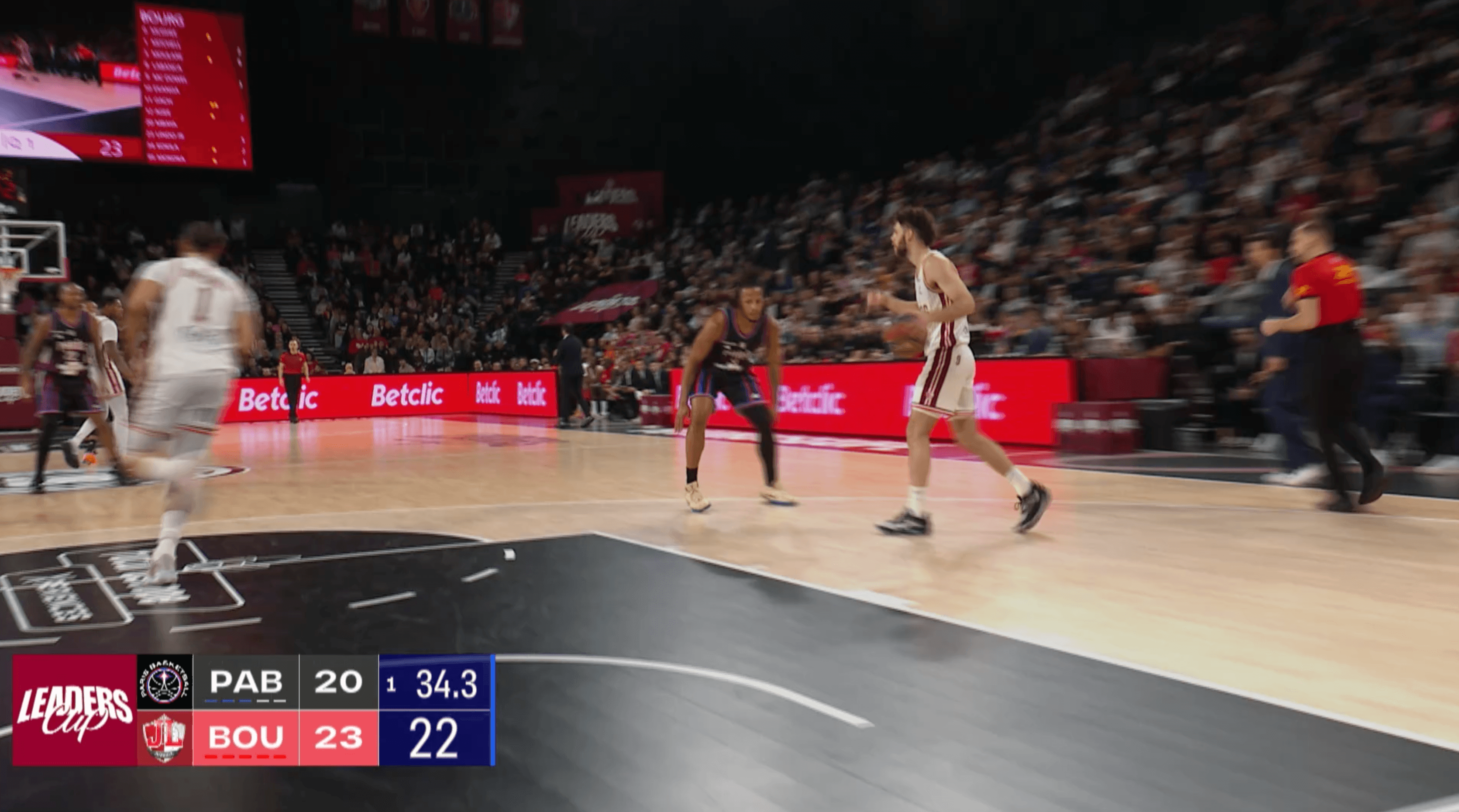
Sur cette situation l'attaquant laisse le défenseur dans son dos et s'arrête ouvrant ainsi le chemin du cercle pour son coéquipier qui drive vers le cercle. Etant donné que le contact n'est jamais vraiment rompu entre les deux joueurs il n'y a pas d'écran de posé de la part de l'attaquant.
Décision
L'arbitre de tête sanctionne l'attaquant d'une faute offensive. C'est une erreur de l'arbitre qui aurait dû laisser le jeu se dérouler. L'attaquant ne pose pas d'écran mais laisse le défenseur dans son dos ou le contact n'est jamais réellement rompu entre les deux joueurs. Cette action est légale.
Règlement
Article 33.7
Description
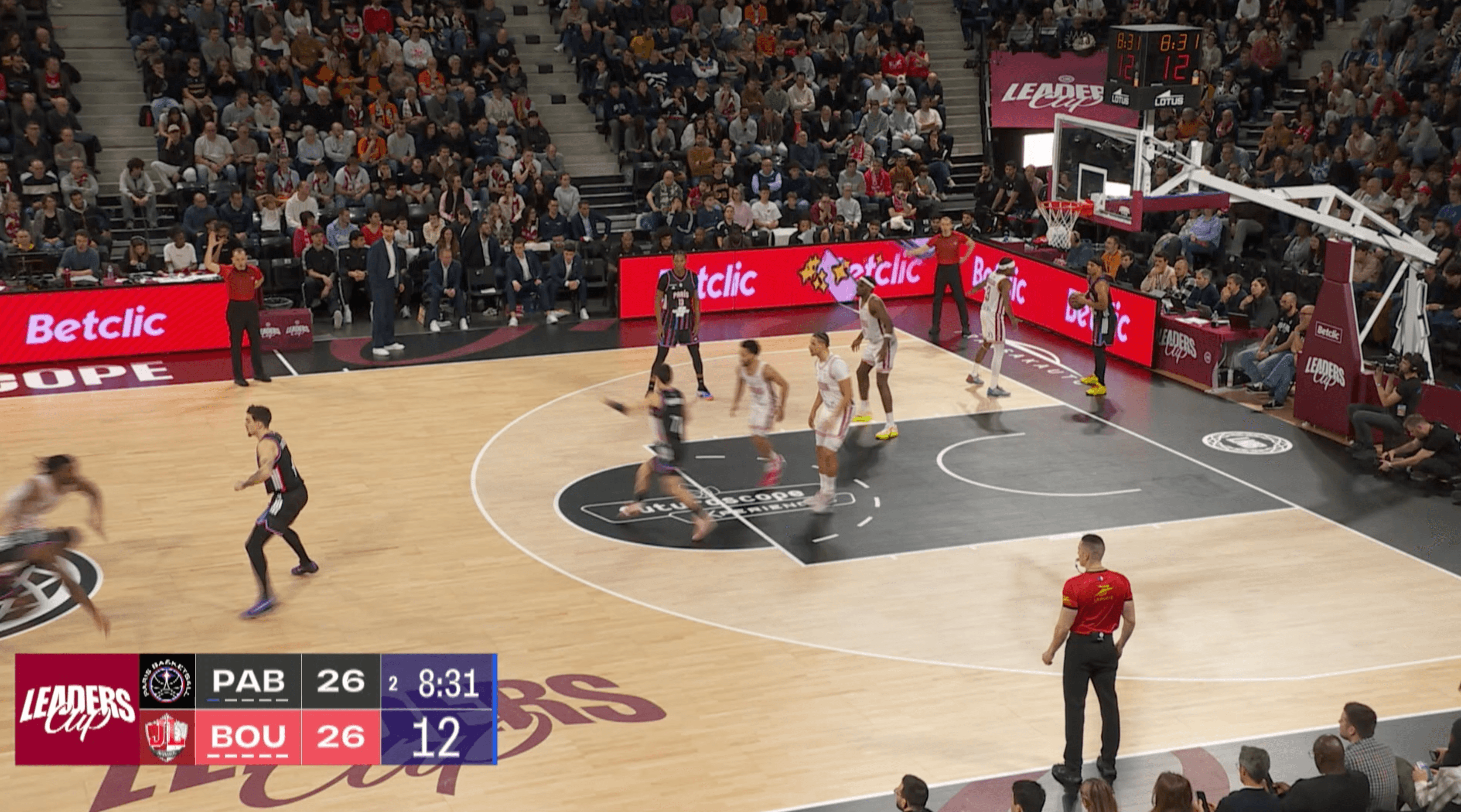
Sur cette situation le joueur attaquant pose un écran pour libérer son coéquipier lorsqu'un contact se produit envoyant les deux joueurs impliqués au sol. Lorsqu'un joueur pose un écran, il doit être stationnaire avec ses deux appuis au sol. Dans cette situation on peut clairement voir que le poseur d'écran est stationnaire au moment où le contact se produit.
Décision
L'arbitre de queue responsable de la situation sanctionne le défenseur d'une faute personnelle pour avoir délogé le porteur d'écran. C'est une bonne décision de l'arbitre.
Règlement
Article 33.7